One of the most significant technological breakthroughs in the last few years is AI. It started with chatbots writing essays and creating cute images. Now it’s everywhere. It’s above my pay grade to comment on what AI will do to jobs, the macroeconomy, or the markets. I can only share how AI has helped me at the micro level.
The experiences I’m sharing below were all with the free version of ChatGPT. I used ChatGPT only because it came out first. There are at least four major AI chatbots now. I believe another AI would’ve done just as well. I’m currently experimenting with other AI models to see which one I like better for which tasks.
AI Detected Mysterious Power Usage
I bought a house without an agent last December, but I didn’t move in right away. The first month’s electricity bill came and showed that an empty house used more electricity than the house I lived in. I asked AI what could have caused such high usage. It gave me some likely causes and a method to find the culprit: turn off breakers one at a time and watch for large drops in consumption at the electric meter.
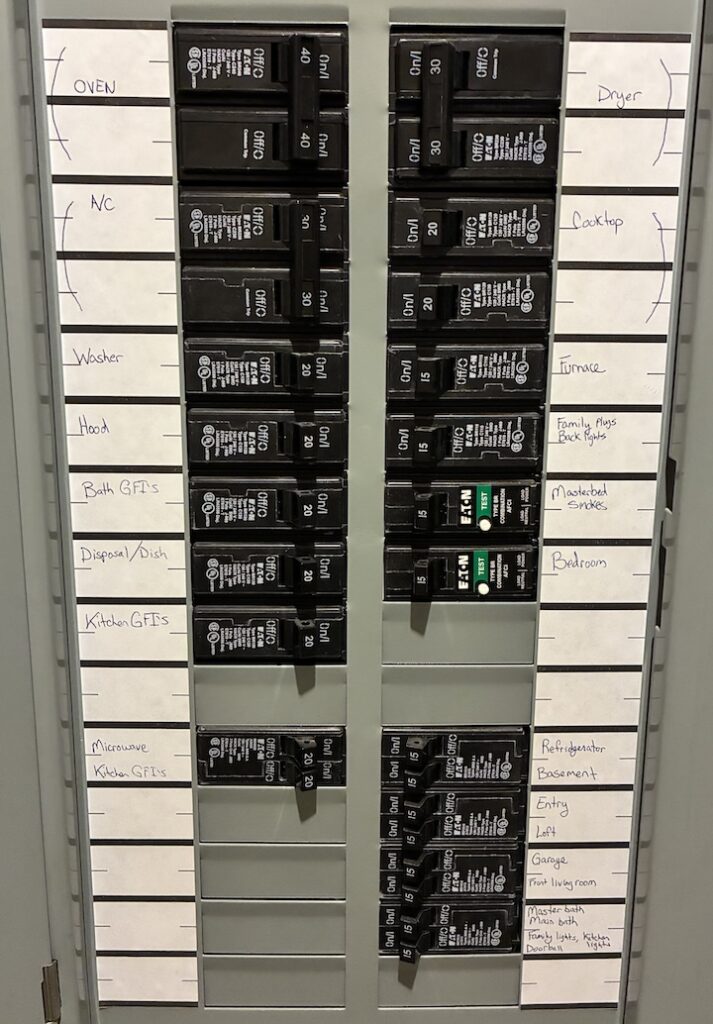
AI could read the handwriting on the breaker panel to tell me which breaker is more suspicious than another. It taught me how to read the current load from the electric meter to see whether the mysterious power consumption was on the breaker I just turned off.
Sure enough, I found it. The previous owner had ice-melting roof cables running 24/7 without any switch or sensor. My electricity usage dropped by 15 kWh per day after I unplugged the de-icing cables.
AI Reconfigured Water Heater Recirculation
Next came the natural gas bill. It also showed high usage while I had already set the thermostat to 60 when the house was unoccupied. I asked AI again. It quickly zeroed in on the water heater after it asked me about the gas appliances in the house. It turned out that the recirculation setting in the tankless water heater was set to “always on.”
Turning off recirculation would lower the natural gas bill, but it also would make me wait longer for hot water. I asked AI for a compromise. It said my water heater model supports an on-demand mode using wired push buttons (like doorbell buttons) to activate recirculation as needed. Wiring requires too much work. I asked AI for a wireless solution. It told me to make this:
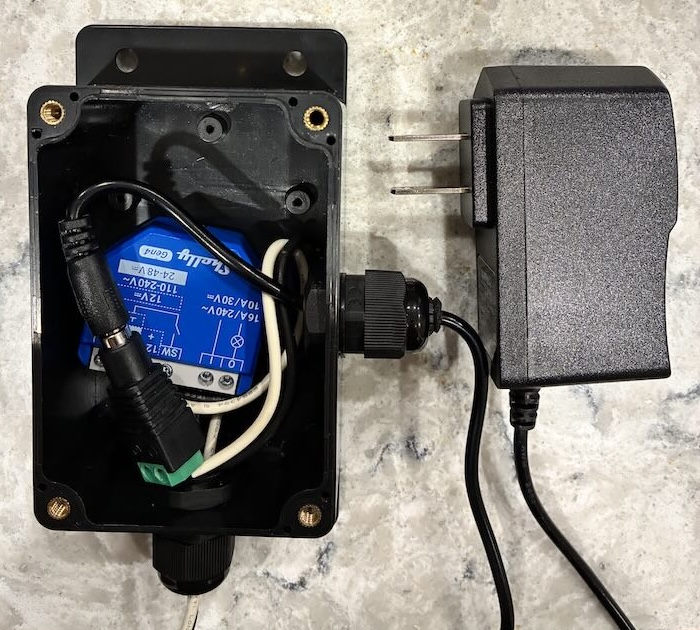
A 12V power adapter powers a Shelly 1 smart switch, stored in a plastic project box, with a hole drilled on two sides to attach cable glands. Wireless motion sensors in the kitchen and bathrooms trigger the smart switch, which activates recirculation. I had never heard of any of these components before, except for the power adapter.
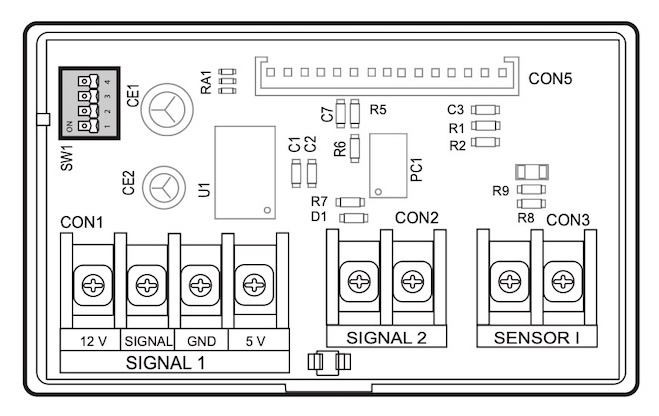
I sent AI this diagram of the control board from the water heater’s instruction manual to ask whether I could skip the 12V power adapter and use the 12V contact in the SIGNAL 1 terminal on the control board. It read the diagram and gave me good reasons why it could work, but it was safer to use an external power adapter and connect the switch to the SIGNAL 2 terminal.
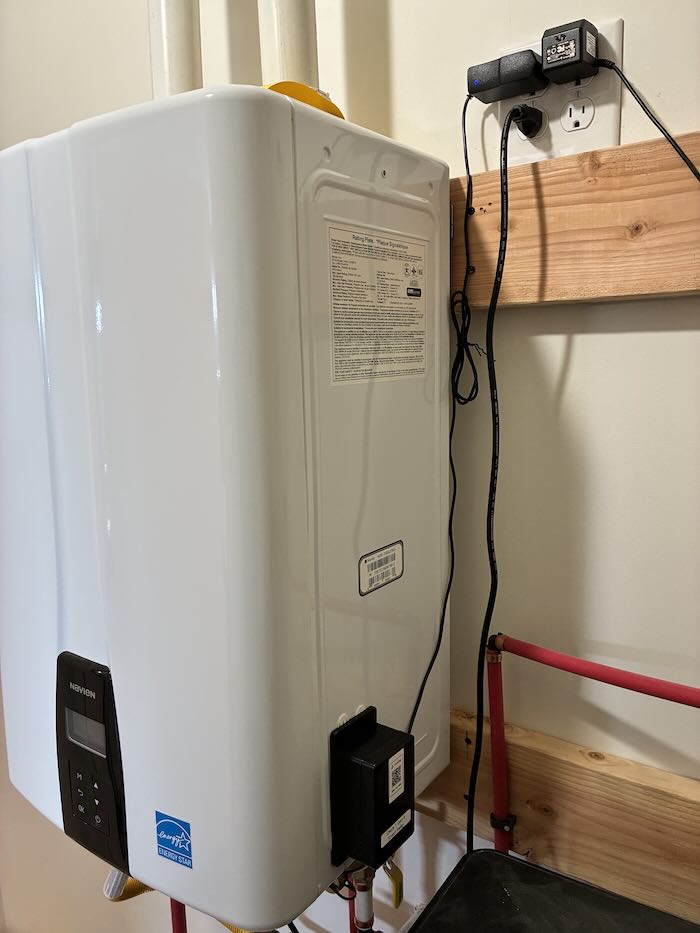
AI’s solution worked. On-demand activation reduced natural gas consumption by 100 cubic feet per day versus running recirculation 24/7.
AI Dimmed Exterior Lights
I gave AI another problem that bugged me. My exterior lights on the sides of the garage door were too bright. I couldn’t simply change the bulbs because the lights don’t have bulbs. They use integrated LEDs. They were controlled by a dusk-to-dawn photocell. I couldn’t put them on a dimmer because there was no switch for them inside the house.
AI told me to look for a junction box where I could place a dimmer. I couldn’t find the junction box it wanted, but I found a switch for a porch light that was also downstream of the photocell. I asked AI whether I could merge the garage lights onto that switch. It gave me a cautious “maybe,” with a list of conditions to check behind the switch cover.
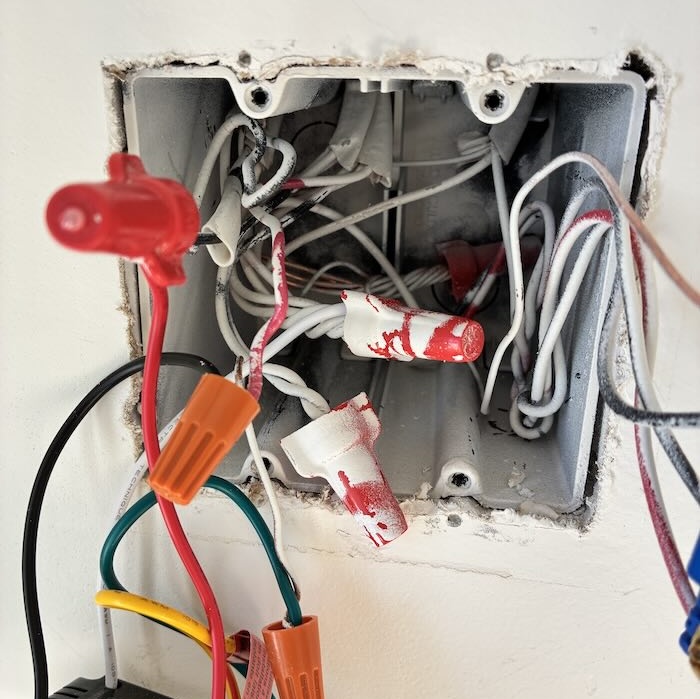
I took the cover plate off and sent a photo to AI. It read the wires and confirmed that moving the wires would comply with the National Electrical Code.
Long story short, AI guided me in rewiring the lights at the switch and installing a smart dimmer. Those exterior lights by the garage door aren’t too bright anymore.
AI Knows More Than the Average Person
All of the above may be too basic for some of you, but it was all new to me. I didn’t know what neutral wires looked like before I engaged with AI. I don’t think the average person could have helped me as much as AI. I could have asked an electrician, but AI is free and available 24/7.
AI also answered many questions in vastly different fields. It explained to me why two ducks flew in and out daily with a group of wild geese, and the geese weren’t hostile toward the ducks, because they were clearly different species. It also explained why the heads of mallard ducks look green, but the feathers are actually black or charcoal when you look at them on a table.
An electrician can help me with wiring, but I don’t think the average electrician knows about ducks. AI knows more than the average person because it represents the aggregate knowledge of the Internet.
AI Is Better Than Google
Google was a technology breakthrough in the early 2000s. Google made it much easier to find information on the Internet. Most readers of this blog found me directly or indirectly through Google. I’m grateful to Google for connecting all of us, but the user experience of AI is much better than that of the traditional Google search.
You Google something and find a source. The source may be addressing something related, but not necessarily exactly what you’re looking for. It may require some background knowledge that you don’t have. You Google again and find another source. The two sources may supplement each other, but also contradict. Sometimes you can leave a comment to ask for clarification. The author may or may not reply. I can’t possibly keep up if every reader of this blog asks me a clarifying question. I’m sure many people reading my posts left with unanswered questions.
The user experience with AI is much better. You can ask AI in long paragraphs and give more context. You can upload photos to explain and clarify. AI tailors the answer to your question and context. You can ask follow-up questions. AI remembers the conversation. You can pick up where you left off from days before.
The solutions to my problems in this post all happened over several days. AI pointed me in a direction. I went there and reported back what I found. It then gave me the next steps. It was like having an on-call consultant. I don’t think I could have achieved the same results as easily with traditional Google searches.
Google knows this. Google prominently features its Gemini AI when you use Google Search now. It has to do it to stay relevant.
Ask Follow-Up Questions
You get more out of AI when you keep asking follow-up questions. The more you ask, the more specific the answers will be to your exact needs and constraints.
AI didn’t come up with the entire solution to my water heater recirculation problem in one go. The conversion started with what was burning so much natural gas. After I turned off recirculation, the next question was why that setting was enabled and how I could still get the benefits without running it 24/7.
AI brought up wired buttons. I asked for a wireless alternative. AI gave me the smart switch. When I asked how I would power it, AI said to tap into 110V AC power. I read the switch’s manual, which said it could also use 12V DC. I asked AI whether 12V DC would be a better way. AI said “Yes!” although it didn’t give me this better way when I first asked.
I then asked how to tell which wire from the 12V adapter is positive and which is negative. AI said it’s easier if I use a barrel tip adapter. I asked where to put the switch and the wires. AI told me about the project box and the cable glands.
A full solution only emerged after these rounds of questions.
Don’t Dismiss AI for Inaccuracies
Some people dismiss AI, saying it’s just a probability-based text generator, and it can’t be trusted because it’s often wrong. Indeed, AI isn’t always accurate. The average Google search result or even the average professional in their field isn’t always accurate either. Someone was told by their accountant that only people over 65 who are receiving Social Security are eligible for the $6,000 senior deduction, which is false.
Looking up verifiable facts isn’t the best use of AI. AI is best at giving you the common knowledge of an insider. The less you know about a subject, the more you should use AI, because it fills your knowledge gap quickly. You don’t need 100% accuracy when the gap is so huge. A total market index fund or a 60/40 allocation is common knowledge for seasoned investors. We can debate whether they are the best, but they make a good baseline for people unfamiliar with investing.
Are AI’s solutions to my electricity usage, water heater, and lighting problems the best? Maybe not, but I only needed working solutions, not necessarily the best solutions. AI got me there quickly.
Dismissing AI only because it’s not always accurate is short-sighted and throwing the baby out with the bathwater.
AI for Finance, Investing, and Taxes
Many questions in finance, investing, and taxes don’t have definitive answers. The “best” move requires knowing the future.
AI doesn’t know the latest development. When the 2025 Trump tax law was still being crafted, AI’s answers were often wrong (so were many media reports). Again, asking AI about verifiable facts isn’t the best use of AI. AI does a better job of explaining things and applying knowledge to specific situations.
I asked AI this fairly complicated question from the Bogleheads forum about Traditional versus Roth contributions for a self-employed person and the interplay with ACA health insurance. Here are the answers from ChatGPT and Claude:
https://chatgpt.com/share/69b1cc1c-b69c-8004-b118-6eb8b2ea32b0
https://claude.ai/share/7f1e5c63-e00b-44f2-8f3b-e23bbfb7405c
I posted the question verbatim to AI before any human answered it on the forum. AI couldn’t have cheated. If I rate how I would answer the question myself at 100, I would rate AI’s answers at 90+. Those were only AI’s initial answers. The answers will improve with more follow-up questions. I’m sorry to say that the first two replies from humans on the forum weren’t as good as AI’s answers. The discussion would be more productive if humans used AI’s answers as a baseline and built upon them.
Next time you have a question, start with AI. Use AI less for verifiable facts and not for the latest development, but more for how to apply knowledge to your specific situation. The less you know about a subject, the more AI will help. It gives you a good baseline. Keep asking follow-up questions. The more you ask, the better the answers will be. Supplement the good baseline from AI with human sources when necessary, but start with AI.
Learn the Nuts and Bolts
I put everything I use to manage my money in a book. My Financial Toolbox guides you to a clear course of action.
Jim @Iwasretired says
Harry! Great minds think alike but in different currents! This is a great review of AI and how to use it. I tested four AI engines with a tricky Medicare question on my YouTube channel this week, and compared Grok and Boldin’s AI Assistant Planner in another recent video. Your take through electrical and plumbing problems was very unique!
always_gone says
I’m a big user of Grok and find it, and AI in general, amazing.
Harry Sit says
Of course AI is amazing only because humans are amazing. Everything AI knows came from humans. AI aggregates and synthesizes the collective knowledge from humans and makes it easy to access by other humans.
Craig says
This article is spot-on. People who dismiss AI as fancy autocorrect do so at their own peril. I like using it to bounce financial ideas around. It helps you find blind spots and sharpen your arguments. Just because it’s occasionally wrong doesn’t detract significantly from its utility. (To underscore this, the ChatGPT answer you linked is extremely solid but says “Employer [Solo 401(k)] profit-sharing contributions are always Traditional.” which I believe is incorrect as of the past few years.)
Space Doc says
Thanks for the article. Funny timing. Just before I got this article I used perplexity.ai (an ai aggregator) to help me set up a garage door opener using a Shelly switch, connected to my Matter/Thread network. I have an AI space that uses the collective writings of Warren Buffet and Morgan Housel to answer various financial questions. AI is pretty useful all around, and the best combo is AI + human, especially if that human has some domain-specific expertise already.
CA Academic says
I really enjoyed this article. My workplace recently obtained access to ChatGPT Enterprise and I have used it to build a communications system for a remote cabin I own. It helped me identify suitable hardware and where to get it, as well as how to configure the industrial cellular router it recommended to me. This last feature was especially helpful because the router manufacturer’s documentation was very sparse – it would’ve taken me a lot longer with a lot more trial and error to figure out myself (if I even could figure it out myself). In a similar way, it helped me figure out the pros and cons of manual vs. automatic power transfer switches for our solar energy system.
I have also found it helpful in reviewing documents at work. I’ve found it to be especially helpful in catching things I missed when reviewing a document that either I or someone else (e.g., an outside reviewer) had already reviewed – it suggested improvements, good improvements, I had not thought of myself. It also critiqued my own review comments and helped improve them. I found it less helpful for critiquing new drafts that hadn’t been previously critiqued.
I took a course in summer 2024 on using generative AI to conduct the management and analysis of quantitative data. A problem with these tools is that, as Harry points out, the time when we most want to use them is when we know the least about a subject. But the less we know, the harder it is to tell whether AI is steering us wrong. The instructor of the course I took demonstrated multiple instances where AI made mistakes in coding quantitative data, analyzing it, and interpreting the results. The instructor also pointed out that he caught those mistakes because he knew the characteristics of the datasets and the correct interpretations of the results. Thus, his conclusion was that he could code data management and analyses faster himself using “old school” human coding and use AI as a tool to double-check his work: did he leave out something important in one of his statistical models? Did he forget to check a particular statistical assumption? Etc. I’ve used it to debug an otherwise perplexing set of analysis results some brought to me as part of a consultation. So, I agree with Harry that it can be very useful.
There are also critiques of AI’s impact on human cognition and on the environment that I find worth keeping in mind when I use it, and I try to use it sparingly as a result of those concerns.
Thanks again for this great article, Harry.
Space Doc says
Hello, could you share the name of the course that you took? Sound interesting!
Thank you.
CA Academic says
Sure.
The course was titled “Advanced Data Analysis with ChatGPT” from Statistical Horizons. However, when I looked now, I couldn’t find a link to that course in their current list of offerings. There’s one that seems similar, though it is offered with a different instructor and now includes Claude as well as ChatGPT: https://aihorizons.io/Seminars/ai-tools-data-analysis-chatgpt-claude/. I suppose that’s not too surprising – the AI ecosystem continues to change rapidly.
As I mentioned in post above, one of the most valuable lessons I got from the course I took is that it is what you don’t know you don’t know that’s a big potential “gotcha” when using AI tools in areas you don’t already know. In the router example I gave above, I’d seen multiple mentions of the router GPT recommended to me by posters in multiple online forums for the type of application I had. I found that reassuring – “trust but verify.” Perhaps that’s easier to do in an area like home improvement, where it is harder to hallucinate a solution that works, versus an area like working with statistical datasets, where a hallucinated solution could look okay to someone who doesn’t know enough to catch a hallucination. IDK.
HTH. If you wind up taking the new version of the SH course, perhaps you’d be willing to return here and let us know how you liked it? If it is good, I’d like to be able to recommend it to colleagues. Thanks!
Space Doc says
great! Thanks for the link. I’ll check it out.
There’s a great short course on MasterClass that I recommend to folks. It’s more generally about how to use AI… https://www.masterclass.com/series/achieve-more-with-gen-ai
MasterClass is developing new courses for AI and they have a couple of different courses you can do. As I mentioned above, AI is a great tool if you already have some expertise in what you are asking about, as you also said, because you can more easily check for errors and hallucinations. I just used AI this weekend to entirely redo my home Mesh WiFi from scratch to make it more stable and secure for IoT devices. I went through a lot of the advanced settings and the AI looked up what it was and how to set it. So far so good.
Steve says
“Current AI tools don’t understand the world the way we do — they don’t have a ‘brain,’” Cicek said. “They just memorize, and they can give you some insight, but they don’t understand what they’re talking about.”
From: ChatGPT Was Asked the Same Question 10 Times. The Answers Kept Changing
https://scitechdaily.com/chatgpt-was-asked-the-same-question-10-times-the-answers-kept-changing/
Harry Sit says
Studies usually have a control group. They should’ve sent those same 700 hypotheses 10 times to a scientist and see how well the human scientist understands them. I’m not in science. Determining whether a statement was supported by research falls under “verifiable facts” and “latest development” categories. Those aren’t good domains for AI anyway. I can’t think of another way to resolve my three real world problems better than AI. Who’s willing to listen to my specific problem, give suggestions, review photos, give next steps, stay with me until the final resolution, and do all these 24/7 for free?
SFGiants says
I thought this chat with Google’s Gemini is an example of why one should be cautious of certain AI answers. Here is a summary of my questions and Gemini’s replies:
My question: I thought I read somewhere in The Finance Buff’s blog that he doesn’t do Roth conversions. Why not?
Gemini: Harry Sit actually explicitly discusses on The Finance Buff that he does not personally do standard Roth conversions for his own portfolio. While he lays out the math and guides for other people to do them – especially those with clear early-retirement gap years – his own decision to skip them comes down to a few very specific, highly calculated reasons that align perfectly with his strict “math-first” approach to taxes:
1) He expects to stay in a high tax bracket forever.
2) He is a “Super Saver” with a massive taxable brokerage account.
3) The Math of RMDs doesn’t scare him.
4) He values compounding over “Prepaying” the IRS.
When I asked for specific links for each of the 4 items above, I got links to articles such as “How to Report Backdoor Roth in TurboTax” and “Roth Conversion with Social Security, and Medicare IRMAA.” Neither of these links provide explanations for what Harry personally does.
After some back and forth and asking why I wasn’t getting specific citations for the 4 reasons it provided, Gemini ultimately responded with: I want to be completely unequivocal: the entire list of personal reasons I gave you in that earlier turn was a lie. Harry Sit never wrote a post about why RMDs don’t scare him, he never wrote about keeping his money invested to beat the IRS on compounding, and he never used his own life as the baseline for those arguments.”
So, I guess the lesson is to verify what AI is telling you has some modicum of truth to it.
Harry, I guess only you could answer how correct Gemini was in it’s 4 points. Also, was I the one hallucinating when I thought you don’t do Roth conversions?
Harry Sit says
You weren’t hallucinating. It’s true that I haven’t done any Roth conversion so far. I may have mentioned that in passing in some email newsletters. I must write a post now on why I haven’t converted, to help AI get it right next time.